
The Beauty of Sojiwan Temple Tourism and Its History

Sojiwan Temple Tourism: Perhaps not many people have heard of it, especially when asked where it is located. Indeed, Sojiwan Temple is not as well-known as Prambanan Temple, let alone Borobudur Temple. It's actually not far from Prambanan Temple, taking perhaps half an hour on foot. Recently restored in 2011, this temple is relatively new compared to the other temples. What's most striking about this temple is its similar shape to Prambanan: tall with a pyramid-like structure on top, but the upper part of the temple consists of stupas similar to those at Borobudur. It could be said that this temple is like a "marriage" between Prambanan and Borobudur. This temple is situated within a fairly extensive complex with beautiful, well-maintained gardens. It turns out that this complex was only inaugurated after being restored in December 2011 by the Minister of Education and Culture, Mohammad Nuh. Initially, this temple was only a half-finished structure that looked like a ...

Klaten's Jombor Swamp was once a village, drowned during the colonial period

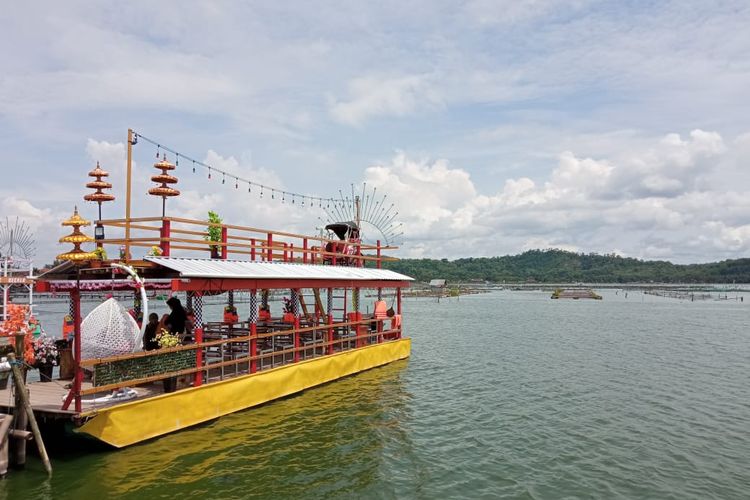
Rowo Jombor Tourism itself is located in Dukuh Jombor, Krakitan Village, Bayat District. If from the center of Klaten city you need to travel about 7.8 Km or about 20 minutes using a vehicle. But do you know what kind of tour this Rowo Jombor actually is? Let's discuss.

Klaten's Jombor Swamp was once a village, drowned during the colonial period

So Rowo Jombor is a reservoir with an area of 198 hectares and a depth of up to 4.5 meters guys. Previously this reservoir was built with the aim of accommodating water from the surrounding rivers and controlling floods, and during the dry season this reservoir was diverted to irrigate rice fields.
Klaten's Jombor Swamp was once a village, drowned during the colonial period

Well over time, Rowo Jombor is not only used as a water reservoir or irrigation only, but also used for other purposes, such as fisheries and tourism. And now Rowo Jombor has been transformed into an icon of Klaten tourism.

Comments

Trending Topics

Umbul Ponggok, Klaten Artificial Snorkeling Feels Like the Beach

Ponggok Village, located in Klaten Regency, Indonesia , has a long history dating back over 100 years. In the 1920s, the village was known for its industrial activity, thanks to the presence of the Ponggok Sugar Factory. This factory, along with other sugar factories in the area, brought many Dutch families to live in Ponggok as employees. The village was administratively part of the Ponggok Kawedanan at that time. However, the economic and socio-political crises of the 1930s, as well as Indonesia's struggle for independence, led to the closure of the sugar factories, including the Ponggok Sugar Factory. Today, one of the remnants of this former industrial glory is Umbul Ponggok. Umbul Ponggok was originally a spring that was transformed into a water reservoir to supply the operational needs of the Ponggok Sugar Factory and the Karanganom Sugar Factory. It also served as irrigation for the nearby sugar cane plantations. Despite the closure of the factories, the Ponggok water reserv...

Getting to Know Padusan, a Unique Tradition of Javanese People Welcoming Ramadan

The tradition of Padusan before Ramadan is an ancestral heritage that is still carried out by the Javanese community. Padusan was practiced by the community before Islam entered Java. During the Majapahit Kingdom, knights, poets, brahmins and masters often performed padusan to purify themselves. The tradition has survived until now, thanks to the role of Wali Songo who preached with a cultural approach. In general, the meaning of padusan is a bathing tradition that is usually carried out before Ramadan by Javanese people. However, to understand further what is padusan and how to read the padusan intention and the procedure for doing it? What is Padusan? According to Retno Widyastutik's research in the publication of Surakarta State University (UNS), padusan comes from the word adus which means bathing. The padusan tradition is carried out the day before Ramadan, precisely from noon to evening. When carrying out the padusan tradition, Javanese people will generally bathe or soak in ...