Sojiwan Temple Tourism: Perhaps not many people have heard of it, especially when asked where it is located. Indeed, Sojiwan Temple is not as well-known as Prambanan Temple, let alone Borobudur Temple. It's actually not far from Prambanan Temple, taking perhaps half an hour on foot. Recently restored in 2011, this temple is relatively new compared to the other temples. What's most striking about this temple is its similar shape to Prambanan: tall with a pyramid-like structure on top, but the upper part of the temple consists of stupas similar to those at Borobudur. It could be said that this temple is like a "marriage" between Prambanan and Borobudur. This temple is situated within a fairly extensive complex with beautiful, well-maintained gardens. It turns out that this complex was only inaugurated after being restored in December 2011 by the Minister of Education and Culture, Mohammad Nuh. Initially, this temple was only a half-finished structure that looked like a ...
Ponggok Village, located in Klaten Regency, Indonesia, has a long history dating back over 100 years. In the 1920s, the village was known for its industrial activity, thanks to the presence of the Ponggok Sugar Factory. This factory, along with other sugar factories in the area, brought many Dutch families to live in Ponggok as employees. The village was administratively part of the Ponggok Kawedanan at that time.

However, the economic and socio-political crises of the 1930s, as well as Indonesia's struggle for independence, led to the closure of the sugar factories, including the Ponggok Sugar Factory. Today, one of the remnants of this former industrial glory is Umbul Ponggok.
Umbul Ponggok was originally a spring that was transformed into a water reservoir to supply the operational needs of the Ponggok Sugar Factory and the Karanganom Sugar Factory. It also served as irrigation for the nearby sugar cane plantations.
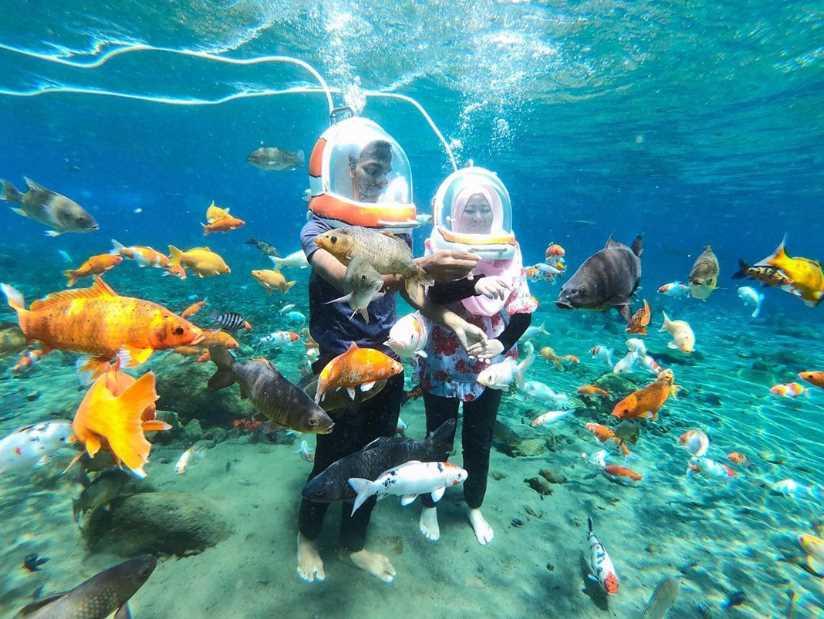
Despite the closure of the factories, the Ponggok water reservoir continues to function as a source of irrigation for rice fields and plantations. The local community often refers to it as Umbul Ponggok, as the water source originates from a natural spring of good quality, providing drinking water to the residents.
For tourists visiting Klaten Regency, a visit to Umbul Ponggok is highly recommended. This picturesque spot was endorsed by Indonesian President Joko Widowo in 2018. Umbul Ponggok offers various activities for tourists, the most popular being taking pictures with the fish and unique props available on-site.
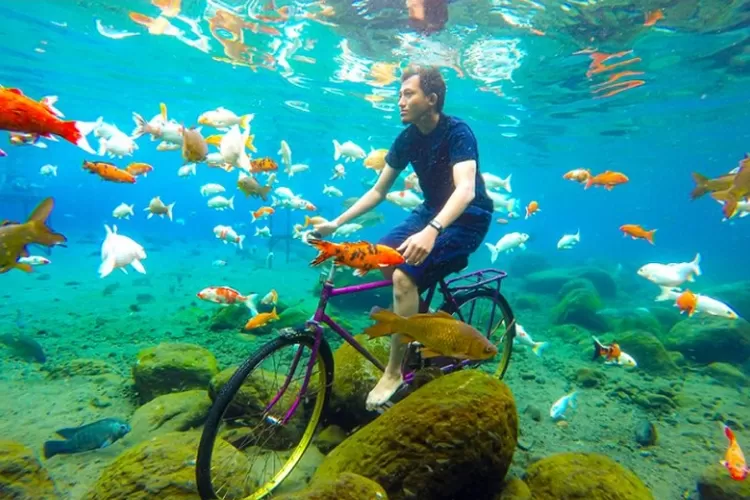
What sets Umbul Ponggok apart from other swimming pools is its direct access to the spring water. The pool's bottom is covered with sand, corals, and a variety of fish. Despite the presence of fish, the water in Umbul Ponggok remains fresh due to the continuous flow of the spring water. Visitors can explore several intriguing photo spots within the pond.
In addition to photography opportunities, visitors can also engage in snorkeling and diving activities at Umbul Ponggok. The attraction provides rental equipment for those who do not possess their own. Snorkelers can rent buoyancy aids, flippers, and special masks. For diving enthusiasts, oxygen cylinders, flippers, wet suits, and diving goggles are available for rent. Divers can encounter various fish species, including goldfish, pomfret, koi, and other ornamental fish, as they explore the underwater world of Umbul Ponggok.
Comments