
The Beauty of Sojiwan Temple Tourism and Its History

Sojiwan Temple Tourism: Perhaps not many people have heard of it, especially when asked where it is located. Indeed, Sojiwan Temple is not as well-known as Prambanan Temple, let alone Borobudur Temple. It's actually not far from Prambanan Temple, taking perhaps half an hour on foot. Recently restored in 2011, this temple is relatively new compared to the other temples. What's most striking about this temple is its similar shape to Prambanan: tall with a pyramid-like structure on top, but the upper part of the temple consists of stupas similar to those at Borobudur. It could be said that this temple is like a "marriage" between Prambanan and Borobudur. This temple is situated within a fairly extensive complex with beautiful, well-maintained gardens. It turns out that this complex was only inaugurated after being restored in December 2011 by the Minister of Education and Culture, Mohammad Nuh. Initially, this temple was only a half-finished structure that looked like a ...

Umbul Kapilaler Klaten: Offering the Sensation of Swimming in Super Clear Water Source

Klaten is a paradise for umbul tourism. One umbul that is interesting to visit is Umbul Kapilaler. This place is also known as Umbul Sigedang. The location is in Umbulsari, Ponggok, Polanharjo District, Klaten Regency, Central Java.
Umbul Kapilaler Klaten: Offering the Sensation of Swimming in Super Clear Water Source

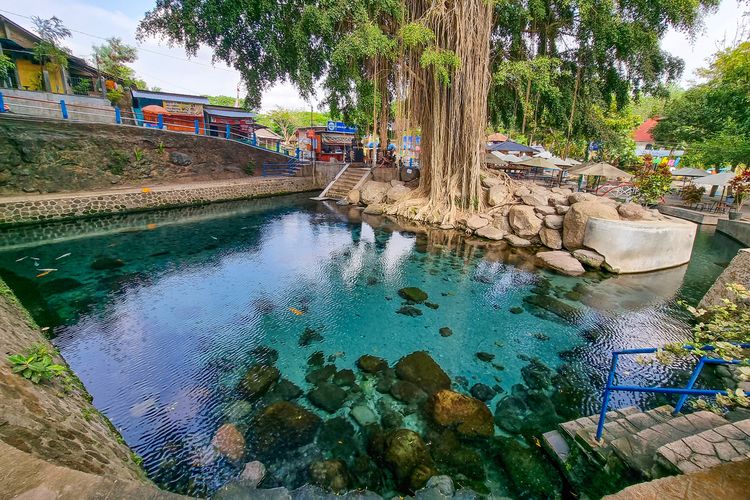
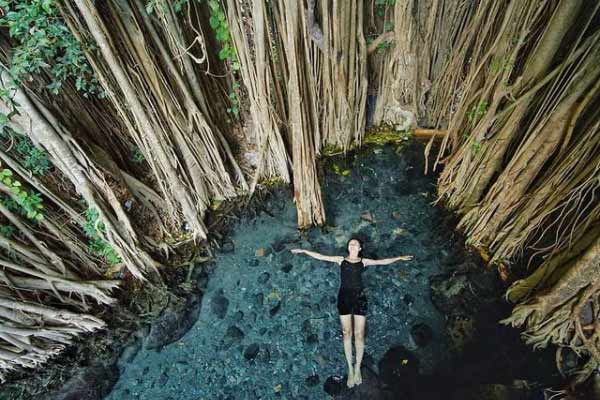
Like umbul-umbul in general, the water in this place is also very clear. However, one of the attractions of this tourist spot is the existence of a banyan tree on the edge of the pond. This banyan tree is one of the visitors' favorite spots for photos. Because it comes from a natural spring, the water here does not smell of chlorine but its clarity is maintained.

The color is crystal clear blue. It is even more charming with the koi fish that swim freely here. The combination creates a refreshing and aesthetic natural scenery when photographed. This Umbul has the nickname of a thousand-gallon spring. That's because this place is one of the springs from a famous bottled mineral water factory in Indonesia.
Umbul Kapilaler Klaten: Offering the Sensation of Swimming in Super Clear Water Source

For tours here, visitors are charged an entrance ticket of IDR 10,000 per person. By paying the ticket, visitors have received mineral water and insurance. This tourist spot already has complete facilities ranging from bathrooms, gazebos, to food stalls. For the opening hours, tourists can come from morning to evening, or 07.00 to 17.00 WIB.

Comments

Trending Topics

Getting to Know Padusan, a Unique Tradition of Javanese People Welcoming Ramadan

The tradition of Padusan before Ramadan is an ancestral heritage that is still carried out by the Javanese community. Padusan was practiced by the community before Islam entered Java. During the Majapahit Kingdom, knights, poets, brahmins and masters often performed padusan to purify themselves. The tradition has survived until now, thanks to the role of Wali Songo who preached with a cultural approach. In general, the meaning of padusan is a bathing tradition that is usually carried out before Ramadan by Javanese people. However, to understand further what is padusan and how to read the padusan intention and the procedure for doing it? What is Padusan? According to Retno Widyastutik's research in the publication of Surakarta State University (UNS), padusan comes from the word adus which means bathing. The padusan tradition is carried out the day before Ramadan, precisely from noon to evening. When carrying out the padusan tradition, Javanese people will generally bathe or soak in ...

Klaten's Jombor Swamp was once a village, drowned during the colonial period

Rowo Jombor Tourism itself is located in Dukuh Jombor, Krakitan Village, Bayat District. If from the center of Klaten city you need to travel about 7.8 Km or about 20 minutes using a vehicle. But do you know what kind of tour this Rowo Jombor actually is? Let's discuss. So Rowo Jombor is a reservoir with an area of 198 hectares and a depth of up to 4.5 meters guys. Previously this reservoir was built with the aim of accommodating water from the surrounding rivers and controlling floods, and during the dry season this reservoir was diverted to irrigate rice fields. Well over time, Rowo Jombor is not only used as a water reservoir or irrigation only, but also used for other purposes, such as fisheries and tourism. And now Rowo Jombor has been transformed into an icon of Klaten tourism.

The Magnificent Architecture of Klaten's Al Aqsa Mosque Like in the Middle East

Klaten's Al Aqsa Grand Mosque is one of the icons of this shining city. The mosque is located on the side of Jl Jogja-Solo, making it easy to find. The facilities are also complete for worship and religious tourism.  Every day this mosque is never empty of people who worship and religious tourism. This mosque has its own charm, especially its strategic location. Many road users also stop by to worship and rest here. Quoted from the book Mosque Architecture by Andika Saputra, S.T., M.Sc. (2020: 122), the Al Aqsa Klaten Grand Mosque has its own charms, including the following: 1. The architecture The Klaten Al-Aqsa Grand Mosque uses magnificent Middle Eastern-style architecture coupled with various carved details at every corner. Having the splendor and typical Middle Eastern architecture makes visitors who want to enter amazed when they see it. From the main door, you will be greeted by ornate carvings of the verses of the Qur'an. 2. The concept is magnificent The main building...