Sojiwan Temple Tourism: Perhaps not many people have heard of it, especially when asked where it is located. Indeed, Sojiwan Temple is not as well-known as Prambanan Temple, let alone Borobudur Temple. It's actually not far from Prambanan Temple, taking perhaps half an hour on foot. Recently restored in 2011, this temple is relatively new compared to the other temples. What's most striking about this temple is its similar shape to Prambanan: tall with a pyramid-like structure on top, but the upper part of the temple consists of stupas similar to those at Borobudur. It could be said that this temple is like a "marriage" between Prambanan and Borobudur. This temple is situated within a fairly extensive complex with beautiful, well-maintained gardens. It turns out that this complex was only inaugurated after being restored in December 2011 by the Minister of Education and Culture, Mohammad Nuh. Initially, this temple was only a half-finished structure that looked like a ...
Klaten is one of the districts located in Central Java. Many people are more familiar with Klaten as a district located between Yogyakarta and Solo. However, more than that Klaten is also one of the districts that until now still firmly preserves the diversity of cultures, traditions to historical relics owned. Many historical relics found in Klaten Regency are temples, including Bubrah Temple, Plaosan Temple, Sewu Temple, Lumbung Temple, Sojiwan Temple, Asu Temple, Peacock Temple and Untoroyono Temple.
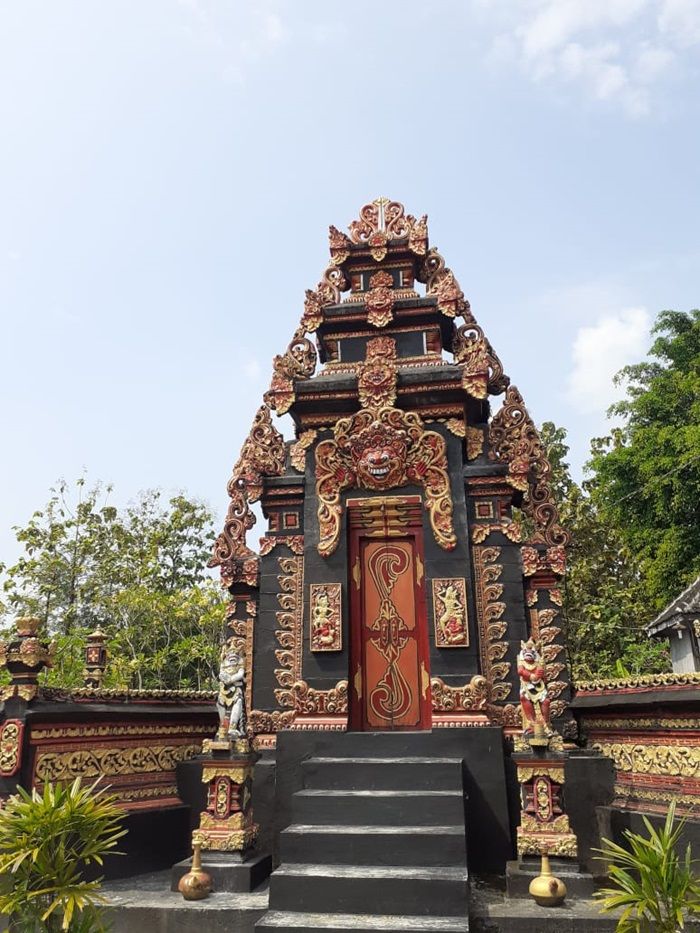
One of the temples that until now still functions as a place of worship for Hindus is the Untoroyono Temple located in Kalangan Village, Pedan District, Klaten Regency. In addition to being a place to carry out worship activities, Untoroyono Temple is also often used as a place of meditation to sharpen mysticism. In the process of establishing Untoroyono Temple, several time-consuming rituals were carried out to facilitate the construction process.
The Mystical Story of the Land Where Untoroyono Temple Stands
Before Untoroyono Temple was established, the land on which the temple stands was nicknamed by the surrounding community as 'Jalmo Moro Jalmo Mati'. This nickname means that the land should not be taken lightly about the awesomeness and seriousness of the location, let alone humans who dare to try to build a house in the area, while animals that eat the grass that grows in the location alone will surely die.
The land where Untoroyono Temple stands has long been known as haunted and wingit. It is said that people often see apparitions that traumatize people. Even though a sports field has been made, it does not reduce the mystical aura in the land area. Some residents who exercise on the field have experienced strange injuries suddenly and are difficult to heal. In addition, there are odd stories from farmers who graze their livestock in this area. Where, instead of growing and developing well, many livestock grazed in the area died suddenly.
The cause of the awesomeness of the land where Untoroyono Temple stands In Untoroyono Temple, there used to be a large stone that is believed to be the place where Aji Saka meditated. It is said that if the stone is moved to another place, it will return to its original place by itself. When the construction of Untoroyono Temple began, the large stone was used as the basic foundation of the main temple. According to stories told by local residents, the reason why the land where Untoroyono Temple stands is haunted is none other than because of the Aji Saka shrine. Many residents believe that the supernatural creatures that are often seen by people are guards sent by Aji Saka to guard the land.
Comments