
The Beauty of Sojiwan Temple Tourism and Its History

Sojiwan Temple Tourism: Perhaps not many people have heard of it, especially when asked where it is located. Indeed, Sojiwan Temple is not as well-known as Prambanan Temple, let alone Borobudur Temple. It's actually not far from Prambanan Temple, taking perhaps half an hour on foot. Recently restored in 2011, this temple is relatively new compared to the other temples. What's most striking about this temple is its similar shape to Prambanan: tall with a pyramid-like structure on top, but the upper part of the temple consists of stupas similar to those at Borobudur. It could be said that this temple is like a "marriage" between Prambanan and Borobudur. This temple is situated within a fairly extensive complex with beautiful, well-maintained gardens. It turns out that this complex was only inaugurated after being restored in December 2011 by the Minister of Education and Culture, Mohammad Nuh. Initially, this temple was only a half-finished structure that looked like a ...

Feel the Water as Clear as Glass? Umbul Manten, the Legend Behind the Natural Beauty!

The spring or Umbul Manten in Sidowayah Village, Polanharjo District, Klaten has been a hot tourist destination. Behind its fame as a tourist attraction, the water from the umbul also supports neighboring villages.
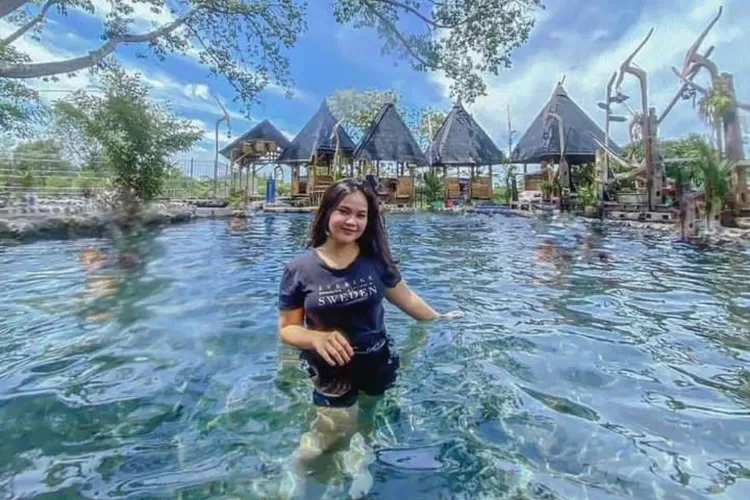
Umbul Manten

Finding Umbul Manten or often also called Umbul Kemanten is not difficult. The spring is located on the edge of the Janti water tourism route, Polanharjo Subdistrict.

It is located on the north side of the Tegalgondo-Janti road or just east of Umbul Pelem, which is in Wunut Village, Tulung Subdistrict. To get to Umbul Manten, you can take the Jogja-Solo road.

Arriving at the Tegalgondo tri-junction, Wonosari District, take the Tegalgondo-Janti road for 5 kilometers. The Umbul is north of the highway but covered by residential areas.
Despite being covered by houses and shops, Umbul Manten signboards are on the right and left of the parking lot road. If it is full on the south side, tourists can pass through the north entrance with a slight detour into the rice fields.


In the main area of the umbul, which is about 300 meters wide, the trunks of old banyan, sepreh and gayam trees still stand tall. There are five ponds in the south side of the umbul complex and one children's pond in the north that contains andesite rocks.

Comments

Trending Topics

The Enchantment of Sojiwan Temple in Prambanan Klaten, the Relief is Rich in Stories and Moral Messages

Sojiwan Temple is located in Kebon Dalem Kidul Village, Prambanan District, Prambanan Regency. This temple is one of the Buddhist temples included in the Prambanan area. Based on some research, Sojiwan Temple was built at the same time as the nearby temples, namely in the IX-X centuries AD. The Central Java Cultural Heritage Preservation Center has finished restoring and organizing the environment to make the temple so beautiful. Sojiwan Temple is unique. This uniqueness comes from several relief panels that tell animal stories. If understood more deeply, these stories convey moral messages that are timeless. These moral messages are also very useful for daily life.  After the research, there were some interesting findings. One of them is the traveling ditch. Some of these ditches are located in residential areas. Inside the perimeter ditch, statues, temple foundations, fence structures, temple stones (loose), structures and temple stones were found around the residential area loca...

Umbul Sigedang in Klaten, Once Lots of Banana Trees and Ancient Mataram Statues

Umbul Sigedang is one of the natural baths (umbul) in Klaten Regency, Central Java. This umbul is within the Umbul Sigedang-Kapilaler tourist area. As the name implies, another umbul here is Umbul Kapilaler . Umbul Sigedang is a pond located on the north side.  The source of this umbul also comes from a spring. The depth of Umbul Sigedang, at its deepest, is 180 centimeters (cm). However, there is a shallow pool for children. When visiting the Umbul Sigedang-Kapilaler area, tourists only need to pay one ticket of IDR 10,000 for two tubs. Umbul Sigedang used to have many banana trees and statues According to the information written in Umbul Sigedang, it turns out that there used to be many banana trees around this umbul. That is the origin of the name Sigedang from the Javanese word gedhang which means banana. In addition, back in the 1980s, there were many statues found around Umbul Sigedang. The statues are thought to have come from the Ancient Mataram Kingdom, which at that time...

Getting to Know Padusan, a Unique Tradition of Javanese People Welcoming Ramadan

The tradition of Padusan before Ramadan is an ancestral heritage that is still carried out by the Javanese community. Padusan was practiced by the community before Islam entered Java. During the Majapahit Kingdom, knights, poets, brahmins and masters often performed padusan to purify themselves. The tradition has survived until now, thanks to the role of Wali Songo who preached with a cultural approach. In general, the meaning of padusan is a bathing tradition that is usually carried out before Ramadan by Javanese people. However, to understand further what is padusan and how to read the padusan intention and the procedure for doing it? What is Padusan? According to Retno Widyastutik's research in the publication of Surakarta State University (UNS), padusan comes from the word adus which means bathing. The padusan tradition is carried out the day before Ramadan, precisely from noon to evening. When carrying out the padusan tradition, Javanese people will generally bathe or soak in ...