Sojiwan Temple Tourism: Perhaps not many people have heard of it, especially when asked where it is located. Indeed, Sojiwan Temple is not as well-known as Prambanan Temple, let alone Borobudur Temple. It's actually not far from Prambanan Temple, taking perhaps half an hour on foot. Recently restored in 2011, this temple is relatively new compared to the other temples. What's most striking about this temple is its similar shape to Prambanan: tall with a pyramid-like structure on top, but the upper part of the temple consists of stupas similar to those at Borobudur. It could be said that this temple is like a "marriage" between Prambanan and Borobudur. This temple is situated within a fairly extensive complex with beautiful, well-maintained gardens. It turns out that this complex was only inaugurated after being restored in December 2011 by the Minister of Education and Culture, Mohammad Nuh. Initially, this temple was only a half-finished structure that looked like a ...
Umbul Nilo in Margosuko Hamlet, Daleman Village, Tulung Subdistrict is one of the oldest of the many spring water tourism destinations in Klaten Regency. Traces of ancient civilization are still found in the tourist area today, what is it?

A Yoni stone with a width of about 80 centimeters was found once passing through the main entrance. The artifact of the Hindu-Buddhist period of the 8th-9th century AD made of andesite stone is still well preserved.
On the east side, precisely under the taproot of an old Randu Alas tree, a smaller Yoni was also found. Chunks of ancient bricks 8-10 centimeters thick are still scattered around.
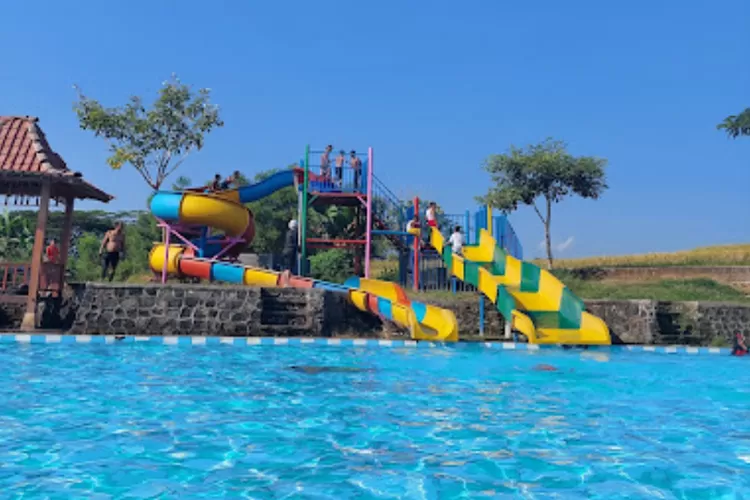
Under the banyan, spreh, randu alas, mahogany and other old trees, the clear spring water will welcome you. Large andesite rocks can still be seen in the vicinity. There are four pools in the tourist area but the main umbul is an adult pool with a natural look. In addition, there are two artificial children's pools and one pool with modern architecture on the west side.
There is an old pond measuring about 50x20 meters on the east side. The pond under a grove of trees is pristine with a main spring and the bottom of the pond is sand and stone about 160 centimeters deep.

On the west and south sides of the main pond, there is one children's pond each. In the western corner of the children's pool, about 100 meters away, there is a new pool with a playground concept equipped with a skateboard, several gasebos and a meeting joglo.
The new pool is in the shape of an arch with varying depths without a partition so that it can be used for playing soccer. The clear water comes from the west side spring.
Comments